
Search “Doberman puppies” and you’ll see two very different-looking
dogs. One is sleek and elegant. The other is heavier, broader, and more
solid. Both are Dobermans. They come from two breed standards, and the
differences go beyond looks.
Here’s what separates the European and American Doberman, and how to
decide which fits your life.
Two Standards, One Breed
The Doberman was developed in Germany in the late 1800s. Over time,
breeding split along two standards:
- American Doberman: bred to the American Kennel Club
(AKC) standard. - European Doberman: bred to the FCI standard, used
across Europe and much of the world.
Neither is a separate breed. They’re the same breed, shaped by
different priorities.
Differences in Appearance
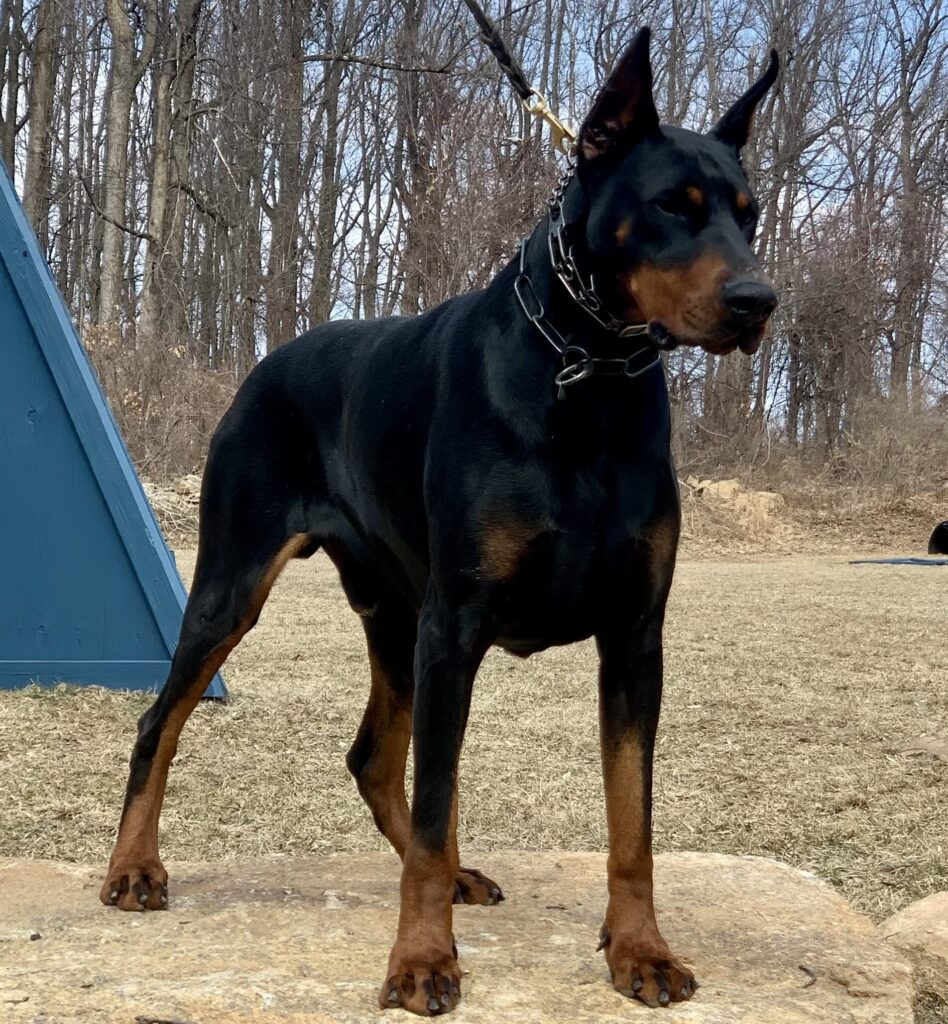
European Dobermans tend to have:
- Heavier bone and more muscle mass
- A thicker neck and broader, blockier head
- A deeper chest and a more powerful overall frame
American Dobermans tend to have:
- A leaner, more elegant build
- A longer, more refined neck and a narrower head
- A lighter frame built for style and movement
Color: The FCI standard recognizes black and brown
(red) with rust markings. The AKC standard also accepts blue and
fawn.
Differences in Temperament
and Drive
This is where the choice really matters.
European lines are often bred with working ability in mind, and many
European breeding dogs are tested in sport such as IGP. As a result,
European Dobermans often have more drive and a stronger working
temperament. They need structure, a job, and an owner ready to
provide both.
American lines are more often bred for the show ring and
companionship. Many are a little softer and lower in
drive, which suits some households well.
These are tendencies, not rules. Individual dogs vary, and the
parents matter more than the label. Always meet or ask about the
temperament of both parents.
Health: What to Ask Any
Doberman Breeder
Dobermans in every line are prone to certain inherited conditions,
including heart disease (dilated cardiomyopathy), von Willebrand’s
disease (a bleeding disorder), hip dysplasia, and thyroid issues. A
responsible breeder screens breeding dogs and shares results. Ask:
- What health testing have both parents had?
- Can I see the results?
- How long-lived are the dogs in this pedigree?
If a breeder can’t answer, keep looking.
Which Doberman Is Right for
You?
A European Doberman may fit if you:
- Want a confident, capable dog with real working ability
- Plan on structured training, sport, or advanced obedience
- Have the time and experience to channel drive
An American Doberman may fit if you:
- Want a lower-drive companion
- Have a quieter household or less training time
Drive must match lifestyle. A high-drive dog in the wrong home isn’t
a better dog. It’s a frustrated one.
Metro K9’s European Dobermans

Metro K9 Academy breeds European Dobermans in Bernardsville, New
Jersey. Our Dobermans are AKC and FCI registered, and our breeding dogs
have comprehensive, breed-appropriate health testing, including OFA
screening. We match every puppy to the right home, and we place
nationwide.
New Jersey buyers also receive 3 months of puppy training at our
facility, because a Doberman with drive needs structure early.
- See our Doberman
puppies - Check upcoming
litters - Read Puppy
vs. Trained Dog
Inquire about availability: call or text
201-230-2285.