
Not Every Dog Needs the Same Level of Training
One of the most common misconceptions in working dog training is that every capable dog should receive advanced protection training. That is simply not accurate.
Basic obedience training builds the foundation for everything else. It teaches clarity, structure, impulse control, and reliability in daily life. For many owners, strong obedience and environmental stability are exactly what they need. A dog that responds consistently, remains neutral in public, and understands structured boundaries is already operating at a high level.
Advanced protection training is different. It requires specific temperament, nerve strength, controlled drive, and a clearly defined purpose. It is not an upgrade. It is a specialization.
Not every dog is suited for protection work. Not every owner should pursue it.
Different Dogs, Different Goals
Not every dog or owner needs the same approach. A family companion trains differently from a dog preparing for advanced protection work. A moderate-drive dog is handled differently from a high-drive working-line dog.
Whether the goal is basic obedience training or advanced protection training, the foundation stays the same:
- Clear communication
- Structured expectations
- Real-world exposure
- Consistent accountability
The intensity may vary. The standard does not.
Real-World Reliability Matters
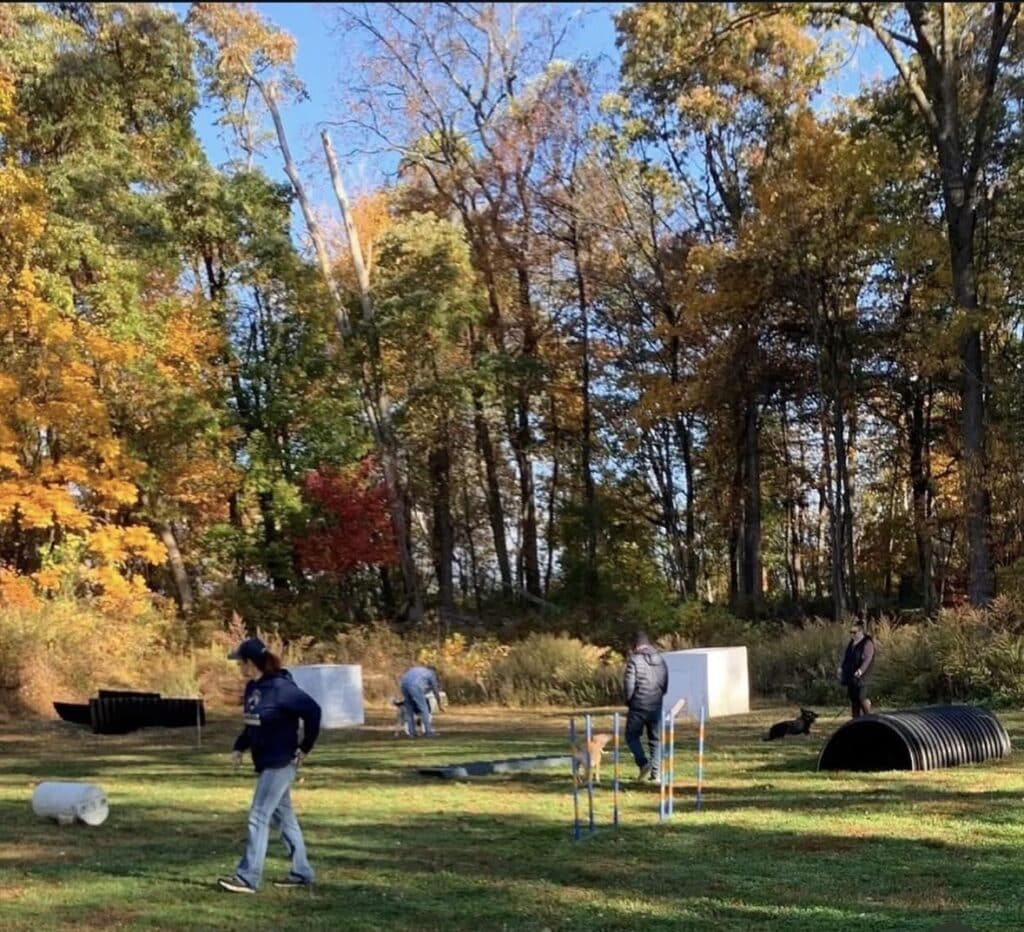
A dog can perform perfectly in a quiet field and still struggle in daily life. That is why we train for environmental stability, consistent responses, and clear handler communication.
Working-line dog training should prepare a dog for normal life, not demonstrations.
Structure Builds Confidence
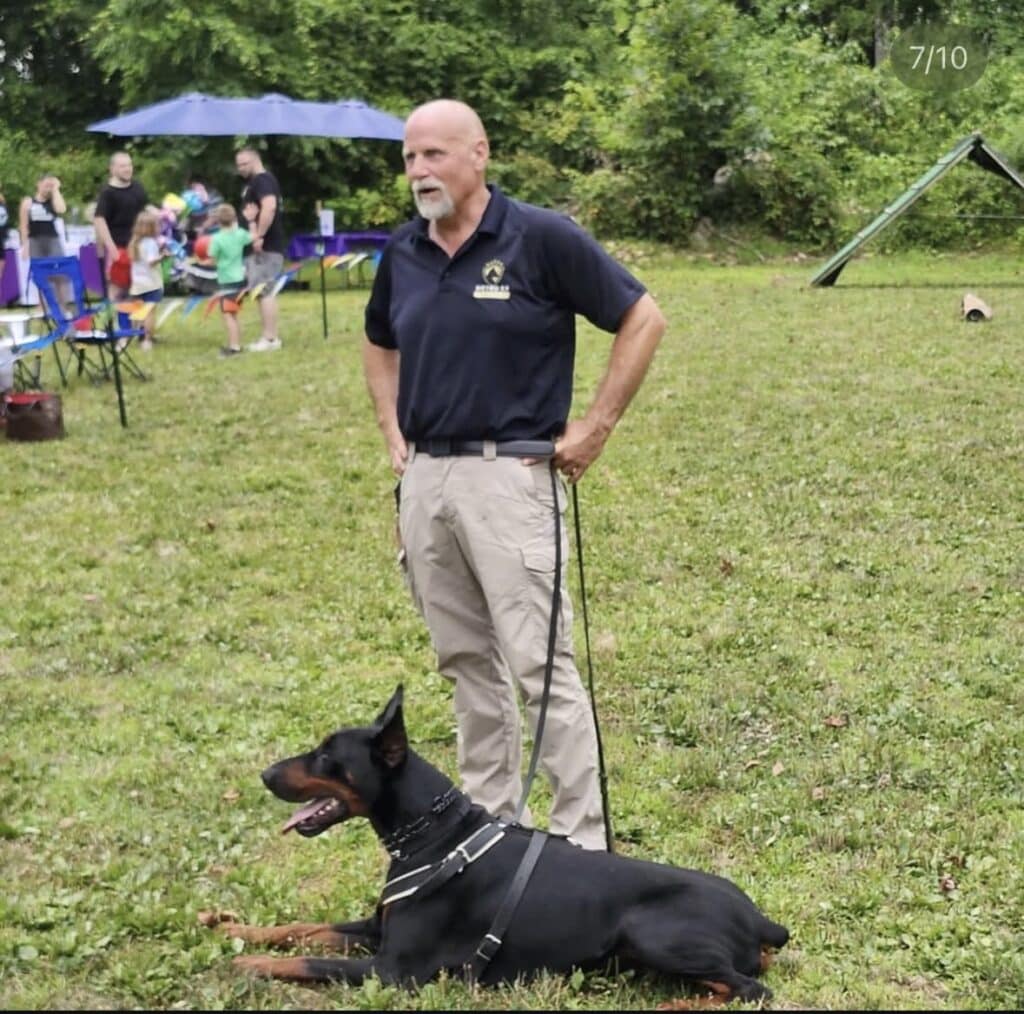
Structure creates predictability, and predictability builds confidence. European working-line German Shepherds and Dobermans respond best when boundaries stay steady and leadership remains calm.
Without structure, drive turns into frustration. With structure, it becomes capability.
Training Continues After Placement
Training does not end at placement. A trained dog arrives with a foundation, but reliability depends on consistent ownership.
The goal is a working relationship built on trust and clarity. When structure stays strong, results stay strong.